Consular Processing in Austin
Your Complete Guide to Consular Processing
If you’re looking to immigrate to the U.S., you might need to go through consular processing. But what is consular processing, how does it work, and how long does the process take? This guide answers all these questions (and then some).
Schedule a Consultation


We Speak

.svg)
.svg)
.svg)
Real Client Wins: Employment Immigration Success Stories
Consular Processing
A Path to Citizenship via Consular ProcessingWe guided a Cuban citizen through the immigrant visa process while they were in Mexico. After helping them secure a Green Card, we continued to assist them until they became a U.S. citizen and petitioned for their own parents.
.svg)
E-2 Visa
Opening a U.S. Business with an E-2 VisaWe assisted a couple from the UK in opening a restaurant in the U.S. By documenting their $450,000 investment and business plan, we secured their E-2 investor visas so they could launch and manage their new business.

VAWA Application
Safety and Status Through a VAWA PetitionWe helped a client in an abusive marriage secure their legal status independently. By filing a VAWA application, we proved the hardships they faced and secured their permanent residency so they could live in safety.
.avif)
Schedule a Consultation
Or call us

Nanthaveth & Associates Advantage: Why We Win Cases Others Can't
%20(1).avif)
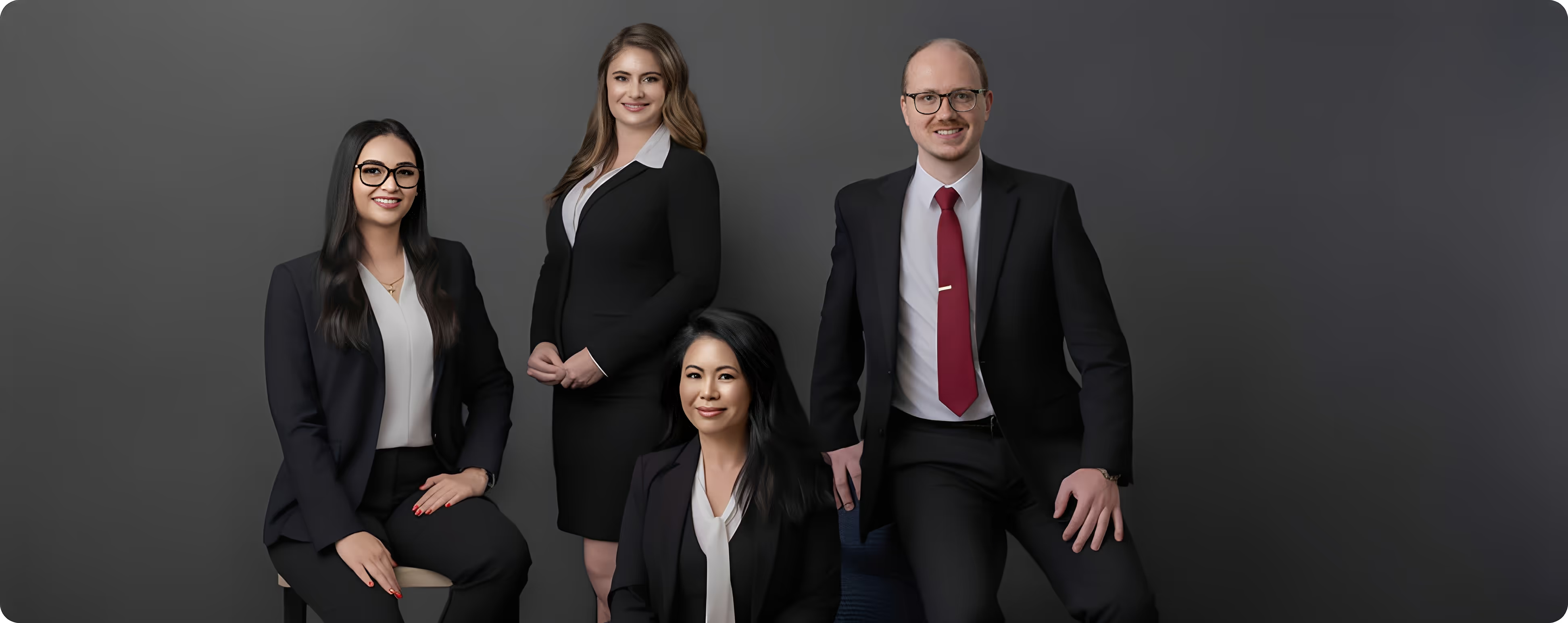
At Nanthaveth & Associates, you're never just a case number to us. You’re a parent, a partner, a dreamer — and your future matters.
Austin isn’t just Texas’s capital — it’s a launchpad for opportunity. From thriving tech firms and global corporations to cutting-edge research institutions and fast-growing startups, this city attracts innovators from around the world. But navigating U.S. immigration law isn’t simple. Every visa category comes with strict rules, changing policies, and unforgiving deadlines. That’s where our experience makes the difference.

20+ Years of Proven Results
Our team offers over two decades of collective experience and is led by recognized authority Vi Nanthaveth. Our firm's attorneys have the skills needed to interpret and apply current immigration laws effectively for qualifying cases.
.svg)
We Speak Your Language
Literally, our bilingual team serves clients in Spanish, Lao, Thai, and English. Over 50% of our clients are Spanish-speaking, and we understand the unique challenges international professionals face.
.svg)
Personal Attention, Not Assembly Line Service
Unlike big law firms that treat you like a number, Vi Nanthaveth or her senior attorneys personally handle your case. You'll have direct access to experienced lawyers who know your name and your story.
.svg)
Consultations That Actually Help
We don't just talk — we listen. Your consultation includes a personalized strategy session to map out your immigration path and provide actionable next steps.
Consular Processing
- USCIS approval
- NVC
- Priority date/immigrant visa number
- Consular office interview
- Visa granted – go to the US
If you’re looking to immigrate to the U.S., you might need to go through consular processing. But what is consular processing, how does it work, and how long does the process take? This guide answers all these questions (and then some).
The Complete Guide to Consular Processing in U.S. Immigration
The following sections explore consular processing and how it works. If you have questions that you don’t see answered here, please feel free to call our office and ask during a consultation – we’ll be happy to give you the guidance and legal advice you need.
What is Consular Processing?
If you are outside of the United States and wish to apply for permanent residency through your familial relationships, you must do so through consular processing. This is the process by which the U.S. Department of State (DOS) works with foreign consulates to secure visas for individuals who wish to immigrate to the United States.
What Types of Visas Can Be Issued Through Consular Processing?
There are two types of visas that can be issued through consular processing: immediate relative visas and family preference visas. The type of visa you will need will depend on the relationship you have to your sponsor and whether your sponsor is a U.S. citizen or green card holder.
If you are interested in applying for a visa through consular processing, you should first consult with an experienced immigration attorney.
Who Needs to Go Through Consular Processing?
Consular processing is a process for those outside of the U.S. who are eligible for an immediate relative or family preference visa.
Immediate Relative Visas:
IR1 - Spouse of a U.S. citizen
IR2 - Unmarried child (under 21 years of age) of a U.S. citizen
IR3 - Orphan adopted abroad by a U.S. citizen
IR4 - Orphan to be adopted in the United States by a U.S. citizen
IR5 - Parent of a U.S. citizen (who is at least 21 years old)
Family Preference Visas:
F1 - Unmarried, adult sons and daughters (age 21 or over) of U.S. citizens
F2A - Spouses and unmarried children (under age 21) of permanent residents
F2B - Unmarried adult sons and daughters of permanent residents
F3 - Married sons and daughters (any age) of U.S. citizens
F4 - Brothers and sisters of adult U.S. citizens
How Do You Begin Consular Processing for Your Immigration Petition?
The first step in this process is for you to file an immigrant petition with U.S. Citizenship and Immigration Services, or USCIS. Once USCIS approves your petition, it will be sent to the Department of State’s National Visa Center, or NVC, for pre-processing.
Once you’ve reached your priority date (for family preference visas only), the National Visa Center will make sure all documentation is submitted and fees are paid so that you are ready for an interview. After NVC pre-processing is complete, your case will be forwarded to the U.S. Embassy or Consulate to schedule an interview.
The embassy or consulate then interviews the applicant and makes a decision on whether or not to issue a visa. If you are issued a visa, you will be able to travel to the United States and apply for admission at a port of entry. If your visa is denied, you will be unable to enter the United States.
What is the National Visa Center?
The National Visa Center is the U.S. State Department’s organization responsible for managing immigration applications from foreign nationals who wish to become permanent residents of the United States. The NVC processes and stores these applications, facilitates fees being paid, stores documentation gathered, and schedules interviews for applicants.
Additional Info on the NVC
The National Visa Center is located in Portsmouth, New Hampshire. It was established in 1999, and its primary function is to provide customer service for those seeking an immigrant visa. The NVC also manages the allocation of immigrant visas, ensuring that they are distributed fairly and in accordance with U.S. law.
The National Visa Center is overseen by the Bureau of Consular Affairs, which is a part of the U.S. Department of State. The NVC is funded by fees that are paid by those who apply for immigrant visas. It does not receive any taxpayer funding.
Do You Need an Interview for Consular Processing?
If you are applying for a green card through your familial relationships through consular processing of adjustment of status, you will likely be required to attend an interview. Some exceptions include those under 13 years old or over 80 years old.
Therefore, it is important to be prepared for the possibility of an interview. When preparing for an interview, it is helpful to review the common questions that are asked. This way, you can be sure to have all the necessary information and documents with you. The types of questions asked will differ depending on your relationship to your sponsor.
Some of the questions that a spousal sponsorship may be asked during your consular processing interview include:
- Where did you and your partner meet?
- What kind of pets do you own if any?
- What side of the bed do you and your partner sleep on?
- What type of car does your spouse drive?
Spouses have much more intimate interview questions. Spouses and other family relationships might get asked:
- Do you have a criminal history?
- Do you have a genuine familial relationship with your sponsor?
- What is your employment history?
- What is your educational background?
- Do you have any drug or alcohol addictions?
As you can see, the questions that you may be asked during an interview can vary depending on the visa category you are applying for. Therefore, it is important to be prepared to answer any questions that may come up.
In addition to being prepared to answer questions, there are a few other things you can do to make sure your interview goes smoothly. First, be sure to dress professionally for the interview. Second, arrive early and bring all the necessary documentation with you. Finally, remember to be honest and truthful in your answers. The consular officer is looking to get to know you and to determine if you are eligible for a green card. Lying on your application or during the interview can jeopardize your chances of getting permanent residency. If you take the time to prepare for your consular processing interview, you will increase your chances of being granted permanent residency.
Can an Attorney Handle Consular Processing for You?
If you're interested in immigrating to the United States, you may be wondering if an attorney can help with consular processing. Choosing to work with an experience immigration attorney will ensure that there are no delays in your process. The immigration process is often confusing and complex but working with an attorney can help make things go more smoothly.
Common Questions About Consular Processing
Check out these common questions about consular processing. As always, if you don’t find the answers you need here, please feel free to contact our office. Our team will be happy to assist you in any way that we can.
Does Consular Processing Have Any Advantages?
The advantage of consular processing over other methods, such as adjustment of status, is that it allows applicants to complete the entire process without having to travel to the United States. You can continue your life in your home country while you wait for the process to complete.
How Long Does Consular Processing Take?
Consular processing can take several months to complete, and sometimes longer. The first step is for the applicant to submit a visa application to the U.S. consulate or embassy – and remember, this step can be taken by an immigration attorney. Once the application is received, it will be reviewed by consular officers. Different locations have different processing times.
What Does the National Visa Center Do With Immigration Applications?
The National Visa Center is a part of the U.S. Department of State's consular affairs division, and it handles immigrant visa petitions that have been approved by the United States Citizenship and Immigration Services. It’s responsible for collecting, reviewing, and maintaining petitioners' and applicants' documents. The NVC also interacts with petitioners, applicants, and their authorized representatives throughout the immigrant visa process.
The NVC assigns each case a unique 13-digit number called an "NVC Case Number." This number is used to track the progress of the case through the immigrant visa process. It uses an online system called the "Document Processing System" (DPS) to securely send, receive, and store petitioners' and applicants' documents.
The NVC lets applicants know when to pay fees and turn in important documents. Then, it forwards your entire case file to the appropriate embassy or consulate – usually, this is the closest one to your home. Your nearest embassy or consulate then contacts you to set up your interview.
Do You Need a Medical Exam During Consular Processing?
You may be required to complete a medical examination as part of the consular processing for your visa. The medical examination must be performed by an authorized panel physician. You will need to provide the following documents to the panel physician:
- A completed and signed Form I-693, Report of Medical Examination and Vaccination Record
- Your passport
- Any vaccinations required for the medical examination.
You may also need to provide additional documentation, such as chest x-rays or proof of any previous vaccinations. The panel physician will determine what additional documentation is needed.
The medical examination must be completed within 60 days of your interview at the consulate.
After a Consular Officer Grants Your Application, Will You Receive a Visa?
After a consular officer grants your application, you’ll receive a visa. That visa enables you to travel to the United States. The visa will be valid for six months from the date of your medical exam – that’s why it’s so important that it’s completed within 60 days of your interview at the consulate.
What if Your Application is Rejected During Consular Processing, or Denied Outright?
If your application is rejected during consular processing, you will be notified by the consular officer. You may be asked to provide additional documentation or information, or you may be told that your application is denied.
If your application is denied, you may have the right to appeal the decision or obtain an inadmissibility waiver. The appeals process can be complicated and time-consuming, so you should consult with an experienced immigration attorney before taking any action.
Do You Need to Talk to an Attorney About Consular Processing?
If you need to speak to an immigration attorney about consular processing, our team is here to help. Call our office today to schedule a consultation with an experienced immigration lawyer who can give you the guidance and legal advice you need.
Are you in need of help from an Immigration Attorney?
Don't hesitate to contact Nanthaveth & Associates. We have helped many people in the same situation as you. Contact us today for a consultation.
Schedule a Consultation
Or call us
Are you in need of help from an Immigration Attorney?
Don't hesitate to contact Nanthaveth & Associates. We have helped many people in the same situation as you. Contact us today for a consultation.
Schedule a Consultation
Or call us
What Our Clients Say About Our Service
.avif)

.avif)
.avif)
.avif)

.avif)
.avif)
.avif)
Areas We Proudly Serve
Our Austin-based team proudly supports employers and professionals across Texas and nationwide — immigration law is federal, so our experience crosses borders.
We serve areas including:
.avif)
Our Office
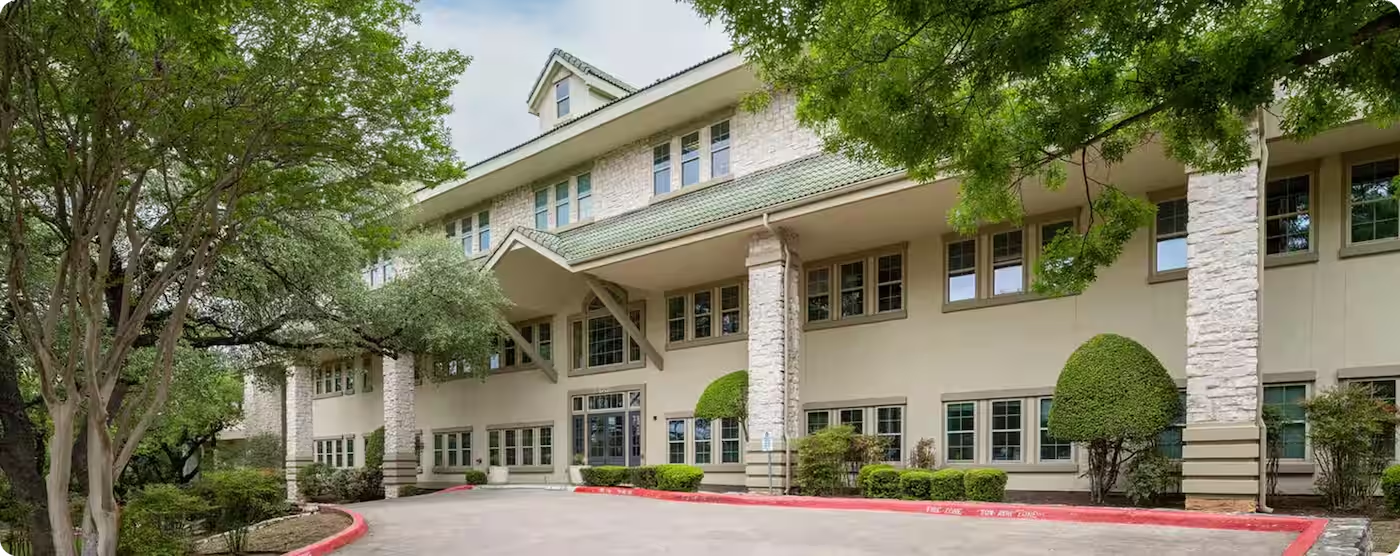
11211 Taylor Draper Lane Suite 1 Austin, TX 78759
Tel: (512) 371-9000
Hours:
Monday - Thursday
9:00 AM - 6:00 PM
Friday
9:00 AM - 5:00 PM
Your First Step Is Simple: Contact Us for a Consultation!
Stop wondering "what if" and find out "here's how." In a consultation, we'll review your situation and explain your options.
Let's talk about your tomorrow today! Call us or fill out our form below. We'll call you back within one business day — usually the same day, within hours.