What Happens If Your Green Card Application Is Denied? Steps to Take.
4/22/26
Getting a green card is oftentimes a lengthy and challenging process, so being granted permanent residency in the U.S. can feel like a major accomplishment. If you apply for a green card and your application gets denied, it's a big disappointment, but you do have options.
An experienced Austin green card attorney can review your denial notice and help you figure out the right path forward before any deadlines pass.
Common Reasons for Green Card Denial
Before deciding how to respond, you need to know why USCIS denied your application. The notice will explain the specific reason for the denial, and that reason shapes everything that comes next.
Insufficient Evidence of Your Relationship to the Petitioner
This is the most common and most avoidable reason for denial. USCIS needs strong, documented proof of your relationship to the petitioner, whether that's a spouse, parent, or employer. Thin or incomplete supporting documents are often the sole reason applications fail, and in most cases, it just means you need to gather more.
Incomplete or Inaccurate Application

Missing forms, missing signatures, unpaid fees, or errors on your application can all result in denial. USCIS may also deny your application if you failed to attend a required biometrics appointment or interview, or if you didn't respond to a Request for Evidence.
Inadmissibility Under Immigration Law
Under 8 U.S.C. § 1182, certain conditions make a person inadmissible, meaning ineligible for a green card, regardless of their relationship to the petitioner. Common grounds include:
- Certain criminal offenses or criminal convictions, including crimes in other countries;
- Prior immigration violations, such as unlawful presence or previous removal;
- False information provided to the U.S. government at any point;
- Certain medical conditions or communicable diseases, including conditions that may require additional medical examination or a medical waiver;
- National security concerns;
- Being deemed likely to become a public charge.
If your denial is based on inadmissibility, you may need to apply for a waiver before you can move forward. An immigration attorney can tell you whether a waiver is available in your situation.
Eligibility Issues
Not every applicant qualifies to file from inside the U.S. Some categories of immigrants must apply through consular processing in their home country. If you filed while ineligible to do so, or if you don't have a qualifying family member or employer petition, USCIS will deny your application on those grounds.
USCIS Error
Sometimes the denial is a mistake. USCIS officers can overlook evidence, misinterpret the law, or misapply legal requirements. If you believe USCIS misinterpreted your case, you may have strong grounds for a motion to reconsider or an appeal.
#cta_start
Talk to an Immigration Attorney Today
A denial notice comes with strict deadlines. Missing them can close off your options entirely. Contact our firm for a consultation.
#cta_end
What Happens When Your Green Card Application Is Denied?
Your situation after a denial depends on three things: the reason for the denial, where you currently reside, and your existing legal status.
Your Legal Status After Denial
If you were adjusting your status inside the U.S. (USCIS Form I-485) and your application is denied, your lawful permanent resident status will not be granted. Your current underlying status may still be intact depending on your situation.
However, if you have no other lawful immigration status at the time of denial, USCIS may refer your case to immigration court and initiate removal proceedings.
Not every denial leads to deportation. Acting quickly after receiving the denial notice gives you the best chance of protecting your options.
Can a Denial Automatically Terminate My Non-Immigrant Status?
A green card denial does not automatically terminate a valid non-immigrant status you hold independently. For example, an H-1B or F-1 visa may not be affected. But if your status was contingent on an approved application, or if you have no other valid status, your situation becomes more urgent. Reach out to an immigration appeals lawyer right away.
Note: If your application was processed through consular processing abroad rather than adjustment of status inside the U.S., your options after a denial are different. Consular denials typically don't have a direct appeal path. In most cases, you'll need to reapply or address the specific ground of inadmissibility. An immigration attorney can tell you which route applies to your situation.
Your Options After a Green Card Denial
The first step after any denial is to read the denial notice carefully. It explains the legal reason and whether you can file a motion, appeal, or reapply. From there, you have several paths forward.
Filing a Motion to Reconsider
You may decide to file a Motion to Reconsider if you believe that USCIS denied your application for a green card in error, based on the facts considered in your case. An immigration attorney may be able to prove that a legal mistake was made by USCIS, which could cause the agency to overturn its decision and grant you permanent residency.
This is a prime example of why working with an immigration attorney is so important. A skilled attorney will be able to review all of the facts associated with your case and how your case was evaluated to identify any mistakes by USCIS that could have resulted in your green card denial.
To file, you'll submit Form I-290B, Notice of Appeal or Motion to USCIS. As of 2026, the filing fee for Form I-290B is $800, which covers both motions to reconsider and motions to reopen. If you can't afford the fee, you may request a waiver using Form I-912.
Filing a Motion to Reopen

A Motion to Reopen may be an ideal option if you've found new evidence that you weren't previously able to obtain. It's important to understand that this motion isn't an opportunity to submit documents that you forgot to include the first time. A motion to reopen is based on providing new evidence that you were initially unable to submit. It indicates that new evidence has changed the conditions of your case and therefore USCIS should reopen it for reevaluation.
Both motions are filed using Form I-290B. USCIS provides a list of direct filing addresses so that you can know exactly where to mail your motion and any associated documents. Make sure to choose the appropriate location. Otherwise, you may experience delays in having your documents processed.
Filing an Appeal
An appeal asks a higher government authority to review whether USCIS's decision was correct. Most adjustment of status denials go to the Administrative Appeals Office (AAO); family-based cases may instead go to the Board of Immigration Appeals (BIA) via Form EOIR-29.
Not every denial qualifies for appeal, and no new evidence can be introduced, which is why skilled representation is critical. Appeals typically take around six months. Filing an appeal with the AAO using Form I-290B also requires the $800 fee.
An appeal is for when you believe that USCIS has denied you in error. Winning an appeal can be a challenge since you're trying to get a favorable outcome without presenting any new evidence. That's why it's in your best interest to work with an immigration attorney. A skilled attorney will have the knowledge and experience to determine if it's wise to seek an appeal or another option.
Marriage-Based Green Card Denied
If your marriage-based green card application was denied because you didn't prove to USCIS that you were in a bona fide marriage, you may file a motion, or you may be able to appeal to the Administrative Appeals Office (AAO). You can strengthen a motion to reopen with additional evidence, including photos, joint financial records, correspondence, and affidavits from people who know you as a couple.
Missing or thin relationship evidence is the most common and most correctable reason for this type of denial.
#cta_start
Not Sure Which Option Is Right for You?
Every denial is different; the right move depends on the specific reason USCIS gave. Our team can review your notice and tell you exactly what makes sense for your case.
#cta_end
Can You Reapply for a Green Card After a Denial?
In most cases, yes. You can submit a new Form I-485 and start fresh. Whether it’s the right move depends on why you were denied.
What to Include in a New Application
You can file a new Form I-485, Application to Register Permanent Residence or Adjust Status, with USCIS, being sure to include all the documentation, evidence, and new information required for a complete submission. These items may include:
- Two passport-style photos;
- A copy of your government-issued photo ID;
- A copy of your birth certificate (you can submit other relevant evidence if yours isn't available to you or if it doesn't exist, such as medical records or school or church documents);
- Form I-864, Affidavit of Support (if it applies to you).
When Inadmissibility Is the Issue
If your denial was based on inadmissibility, reapplying alone won't solve it. You may need to apply for a waiver first using Form I-601 or Form I-601A. If you were previously deported or entered the U.S. without status more than once, you may also need Form I-212 to request permission to reapply.
Check the USCIS green card eligibility categories to confirm you qualify under your specific category before refiling.
Was Your Green Card Renewal Denied?
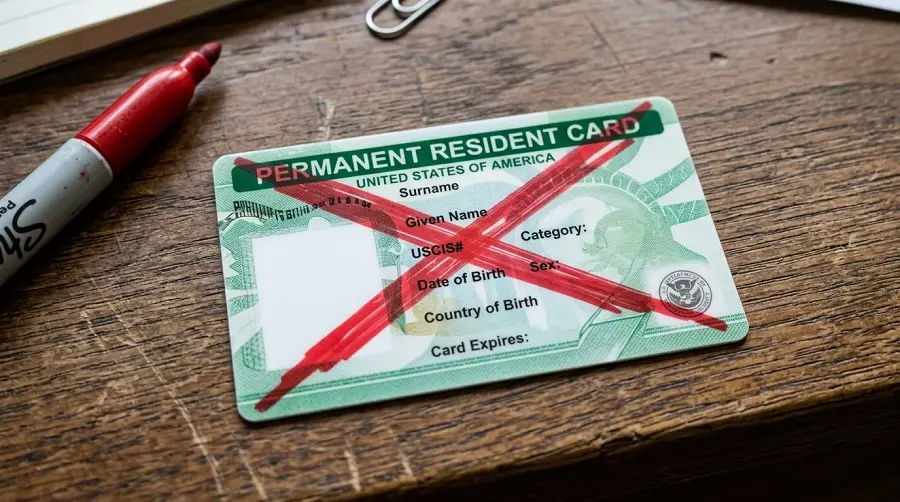
If your green card renewal is denied, review the denial letter to identify the issue. It is often incomplete applications or missing documents. Expired cards can complicate travel and work, but they don't necessarily affect your underlying permanent resident status. Consult an immigration attorney for guidance.
First Steps to Take Right Now
The single most important thing to do after a green card denial is to contact an immigration attorney as quickly as possible. Deadlines for motions and appeals are typically 30 days from the decision date, and missing them can close off your legal options entirely. Here's what to do:
- Read the denial notice carefully: It explains the specific legal reason for the denial and outlines whether you can appeal, file a motion, or reapply.
- Contact an immigration appeals attorney: They can assess whether an appeal, motion to reopen, motion to reconsider, or a fresh application is the right path.
- Gather your documents: Pull together your original application materials, any evidence you submitted, and any new records that may be relevant.
- Don't refile without addressing the problem: Submitting the same application again without fixing what caused the denial will almost certainly result in another denial.
If you already had an attorney when you filed, loop them in immediately to discuss next steps before any deadlines pass.
Acting fast doesn't guarantee approval, but waiting often does close doors. The sooner you get legal guidance, the more options you'll have.
Work with an Austin Immigration Appeals Attorney
A denial isn't the end, but acting quickly matters. The Texas immigration attorneys at Nanthaveth & Associates have helped clients navigate green card denials, motions, and appeals across Texas. We'll review your case, explain your options clearly, and fight for the outcome you deserve. Contact us to get started today.
Share This Page



Get Your Case Reviewed
Or call us
Green Card Denied? Don't Wait.
Deadlines to appeal or file a motion are strict. Talk to our team today before your options narrow.
Get Your Case Reviewed
Or call us